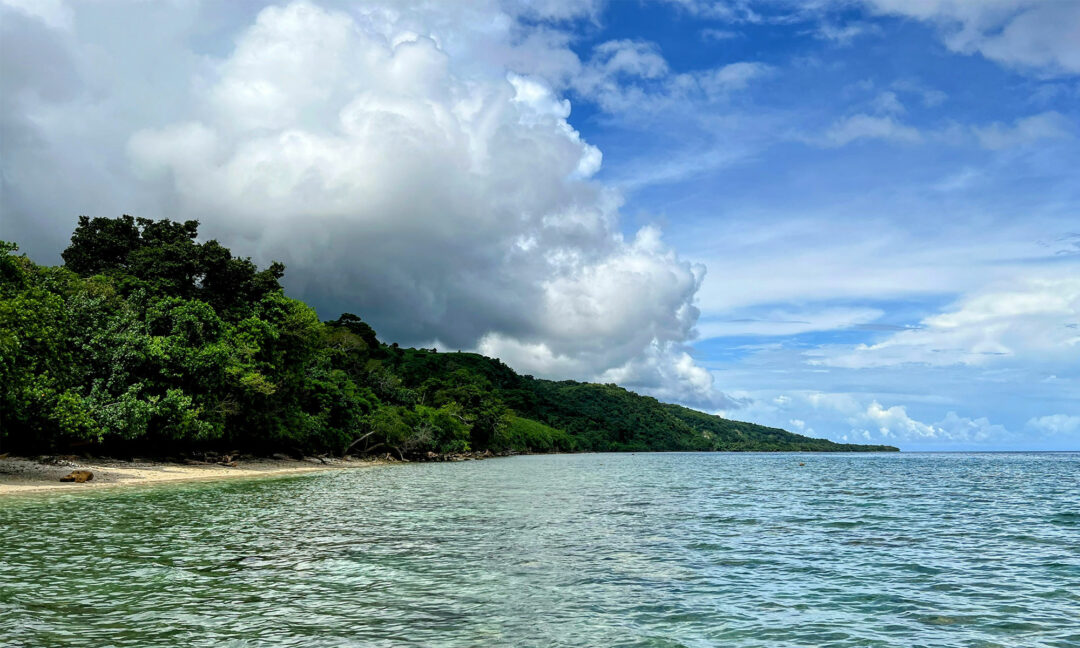
For the island nation of Vanuatu, climate change, with rising seas and extreme weather, has become a matter of national security.
Photograph: Victor Galaz
The Pacific islands struggling to survive
The tiny archipelagic Republic of Vanuatu is taking its climate battle to the UN, challenging major greenhouse gas emitters to take responsibility. Political scientist Victor Galaz reports from Vanuatu and neighbouring Fiji in an article now available in English.
The article in Swedish: Stillahavsöarna som kämpar för att överleva
After this article was published, the UN General Assembly adopted Vanuatu’s resolution by a vote of 141 to 8.
A volcanic eruption in the north, recurring flooding and on top of that, a direct threat from Donald Trump.
“How do you sleep at night?” I asked Vanuatu’s minister for climate change, Ralph Regenvanu. It is a Monday afternoon in March and the warm, heavy rain has once again fallen over Port Vila, the capital of Vanuatu.
Our conversation is monitored by a staffer, who sits silently in a leather armchair across from me. That’s understandable. These are diplomatically difficult times for the island republic. How we got here will take some explaining.
From Port Vila to The Hague
International climate efforts have been called into question for a long time, and by many pundits. Some see the rotating climate conferences as a painfully slow process, whose logic of consensus gives those with the lowest climate ambitions an outsized influence to block important decisions, such as the need to quickly phase out fossil fuels.
The 1.5-degree target
The 1.5-degree target is an international climate goal, which was defined in 2015 as a part of the Paris Agreement on climate change mitigation. The goal is to keep the global temperature increase “well under 2 degrees Celsius above pre-industrial levels”, with the aim of keeping it under 1.5 degrees. Pacific Rim countries are often highlighted as one of the driving forces behind the acceptance of this target during the Climate Change Conference in Paris. According to the UN’s Intergovernmental Panel on Climate Change (IPCC) as well as others, the difference between global warming of 1.5 and 2 degrees is considerable, as 2 degrees would lead to significantly greater stresses on the stability of the climate system, ecosystems on land and in the sea, countries’ economies and the livelihood and health of vulnerable populations.
Others feel that the focus of the negotiations on global temperature targets (like the 1.5 degree limit) stands in the way of more concrete shared goals, such as the expansion of clean energy. Today, researchers are openly discussing the risk of a UN system that, despite an ever warmer and increasingly uncertain world, is paralysed by bureaucracy and deadlocks between countries.
The 2026 climate year began with the news that the past 11 years have been the 11 warmest on record. Shortly thereafter came a report from Icelandic researchers who estimate that the country’s glaciers shrank by 15 billion tonnes between 2024 and 2025, and new research that shows that global models have underestimated the rate of rising sea levels.
At the same time, the eyes (and money, I might add) of rich countries are turning away from the climate issue towards the ongoing wars in Europe and the Middle East.
So what happens with the climate issue now?
International Court of Justice (ICJ)
Founded in 1945, the ICJ is the UN’s principal organ for legal assessments and judicial decisions in cases between states. The court consists of 15 judges who are elected by the UN General Assembly and the Security Council. It is domiciled in the Peace Palace in The Hague in the Netherlands. Previous advisory opinions from the ICJ have been about topics such as states’ use of nuclear weapons (1996) and Israel’s occupation of the Gaza Strip and the West Bank (2024).
Many have pinned their hopes on a process that was initiated by a small group of students from the Pacific Rim, and a statement issued by the International Court of Justice (IJC) in The Hague last year, 2025. The story behind this statement is extraordinary in many ways and begins at the University of the South Pacific (USP) in the capital of Vanuatu, Port Vila.
Seven years ago, a group of environmental law students in Port Vila asked themselves: What would happen if the international community’s highest court – the IJC – clarified the responsibility of states for the climate issue under international law? Because surely, it must be possible to do more than simply accepting the meagre results of the rotating international climate conferences year after year?
The question struck a chord in the government of Vanuatu and its climate minister, and from there it took flight. The rest is, as they say, history.
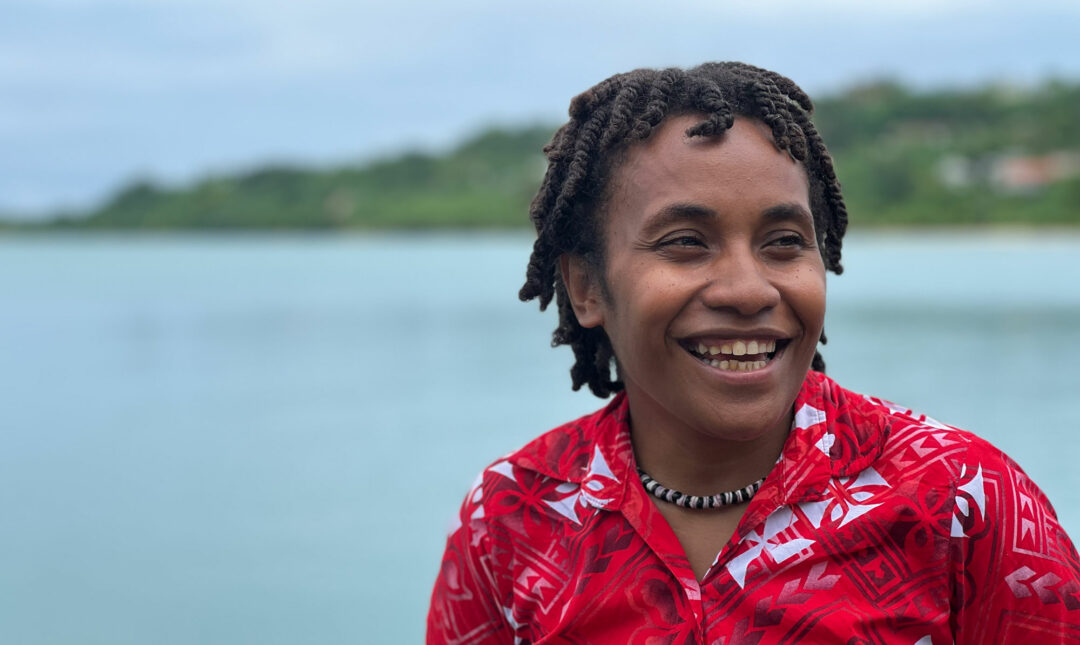
For two weeks in December 2024, representatives of large and small countries presented their positions to the 15 judges on the ICJ in the Peace Palace in The Hague. A couple of these representatives belonged to the group of students in Vanuatu who asked the question that went all the way to the court. Cynthia Houniuhi, born and raised in the Solomon Islands and now a university teacher in Port Vila, was one of them.
Photograph: Victor Galaz
The testimony
I visit the capital city of Port Vila for a few days in March. The city seems to have begun to recover from the devastating 7.3-magnitude earthquake at the end of 2024. The year before, 2023, the archipelago nation was struck by two giant tropical cyclones just 48 hours apart. In those hours, 64 per cent of the country’s GDP was laid waste.
There are no traffic lights in the city. Cars dance along the roads, honking “look out!”, veering left and right around bathtub-sized potholes and swerving for white minibuses and the occasional plucky pedestrian. They say it works well. The only problem is when people drive too fast under the influence of kava – the brownish-grey national drink made from the roots of the kava plant.
“Am I really the right person to do this? It’s a huge honour, but nothing can prepare you for that moment,” says Cynthia Houniuhi about her testimony when we meet. The year before visiting The Hague, she travelled around the Solomon Islands to collect witness statements from local villages about the effects of the climate crisis. She got permission from the chieftains to speak for them in The Hague.
The night before her testimony, she barely slept. Once at the podium facing the judges, she felt her legs trembling. But the nerves soon went away. For six minutes, Cynthia talked about cultures whose existence cannot be separated from the land that is now being swallowed up by the warm, salty sea waters. After that, she asked the court to do what the international climate negotiations have failed to do: demand responsibility from the biggest greenhouse gas emitters.
At that moment, she didn’t know that the conclusions of the court would be so radical that they would make practised climate negotiator Christiana Figueres, the former head of the United Nations Framework Convention on Climate Change, scream and cry with joy on her podcast.
Photograph: Victor Galaz
”1.5°C to stay alive!”
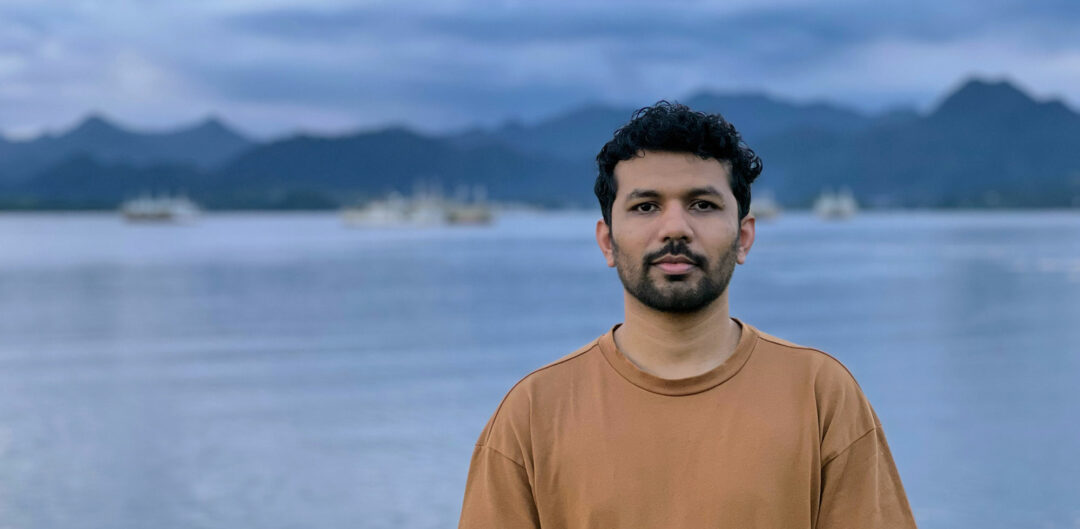
“We were in total shock about how strongly worded the court’s statement was,” says Vishal Prasad. “So much so that we had to hastily rewrite parts of the press material we had prepared.”
He smiles broadly as he remembers that day in July 2025 when the ICJ’s unanimous statement was published.
We meet at a restaurant in a hotel in Fiji’s capital Suva. The hotel is reminiscent of the American television series White Lotus with its well-tended, lush garden and luxurious interiors. The ocean glitters in the afternoon sun while black thunderheads grow on the horizon.
Pacific Island Students Fighting Climate Change
This is a student organisation formed in March 2019 after 27 law students at the University of the South Pacific in Vanuatu started their campaign to get the ICJ to issue an advisory opinion on the climate. Last year, the organisation was awarded the “alternative Peace Prize” – the Right Livelihood Award – along with the Guamanian poet and human rights lawyer Julian Aguon, for their work with this campaign.
Vishal is the director of the organisation Pacific Island Students Fighting Climate Change. It is not an exaggeration to say that their work is the reason that the climate issue made it all the way to the world’s highest court.
The court’s sharply worded statement about the responsibility of states to act on the climate crisis was a positive surprise for many. So was its assessment that the 1.5 degree goal of the Paris Agreement is not a voluntary commitment, but a requirement, and that the extraction of fossil fuels can be seen as a breach of international law. Environmental law researchers say that last point might turn out to be one of the most effective of the court’s advisory opinions in the longer term, through its impact on legal and permit processes all over the world.
The question on everybody’s lips is, what happens now? The United States has left the international climate treaty. The court’s opinions are not legally binding, and have not always led to expected breakthroughs in the past. Moreover, the mathematics of the climate system are ruthless. No matter what 15 judges in The Hague say, the world will, in the very near future, exceed the 1.5 degree limit – a target that has been central to the climate work in Pacific Rim nations for more than a decade.
The islands’ slogan “1.5°C to stay alive!” still echoes in the corridors of the climate negotiators. So I ask an uncomfortable question: What happens on the day we pass the tipping point? Vishal Prasad collects his thoughts before answering.
“The United States is not the whole world. And we don’t have any other choice. If your house is burning, you do everything you can to put out the fire. We can’t wait, we can’t stop, we have to keep going.”
We round off the discussion and talk about life in Fiji. It’s one of the safest places to live if World War III breaks out, says Vishal, winking. We parted with a handshake and a laugh. A bit later, CNN reports that Iran has attacked two oil tankers on Iraqi territorial waters outside Basra. Soon after that, the thunder starts.
The price of the climate crisis
The invisible hand of the climate crisis doesn’t care that the eyes of the Western world are elsewhere. It continues its work of raising sea levels, salinating the groundwater, increasing the intensity of precipitation, strengthening hurricanes and acidifying the ocean that gives life.
Photograph: Victor Galaz
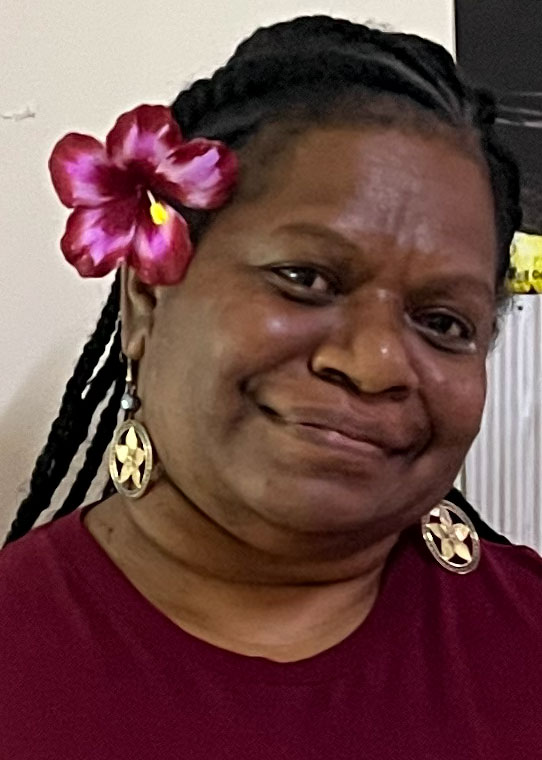
The little aid organisation Action Aid Vanuatu is headquartered in Port Vila. Flora Vano works here, supporting women when disaster strikes. Flora was also one of those who went to the Peace Palace in The Hague to testify before the 15 judges of the ICJ.
The organisation’s office has giant panorama windows facing the main street, but the view is blocked by a muddy pile of earth mixed with chunks of concrete and metal. The property owner dumped construction waste outside the organisation’s entrance after the big earthquake two years ago.
“A lot of people think our office is closed,” Flora sighs in frustration.
We talk about her testimony in The Hague and about the effects of the climate crisis in Vanuatu.
“The unpaid labour of women is already massive, and when a cyclone ravages the island or a drought strikes, their burden increases even more,” she says. Flora makes it clear that she is speaking from her own experience, and continues, “Every day someone asks themselves, ‘How can I survive another day? Will my children have food?’ If we women don’t make sure there’s food on the table, we get beaten.”
Vanuatu is one of the countries in the world with the highest number of recorded cases of violence against women and girls. The hope that the ICJ opinion will make women’s daily lives in Vanuatu safer shines in Flora Vano’s eyes when we say goodbye a moment later.
One of the greatest challenges is – to put it bluntly – money. People sometimes say that the motto “1.5 degrees to stay alive” should be rewritten to “USD 1.5 billion to stay alive”. And that’s not wrong. A couple of years ago, the Marshall Islands presented their National Adaptation Plan, a “survival plan” that prepares the nation “for the worst, while hoping for the best”.
The cost of climate adaptation for the archipelago republic was estimated at USD 35 billion. That’s 125 times more than its GDP, or 350 times more than it received in international aid in 2021.
The archipelago country of Tuvalu is working to re-create 7.3 hectares of land area that will be able to handle a one-metre rise in sea levels. The price tag for the project is USD 40 million. The problem is that it only represents 2 per cent of the total land area that would need to be re-created to meet the needs of the population in the future.
That’s why there is a plan B and C as well. At the end of last year, the first Tuvaluan migrants arrived in Australia in a unique “climate visa” agreement between the countries. The last resort is the project “Digital Tuvalu”, which creates a digital copy of the islands’ geography to remember them by.
The governments of Fiji and Vanuatu, for their part, have begun moving entire villages. Fiji has identified 48 villages with an urgent need for relocation, but in the longer perspective, more than 800 villages are expected to need moving. These efforts have forced Fiji to learn to manage the trauma of people who had to abandon their history and their ancestors who are buried in those lands.
We in Sweden rarely speak about this part of the climate issue – climate change doesn’t just bring heat, acid rain and downpours, but also deep trauma and grief.
Photograph: Victor Galaz
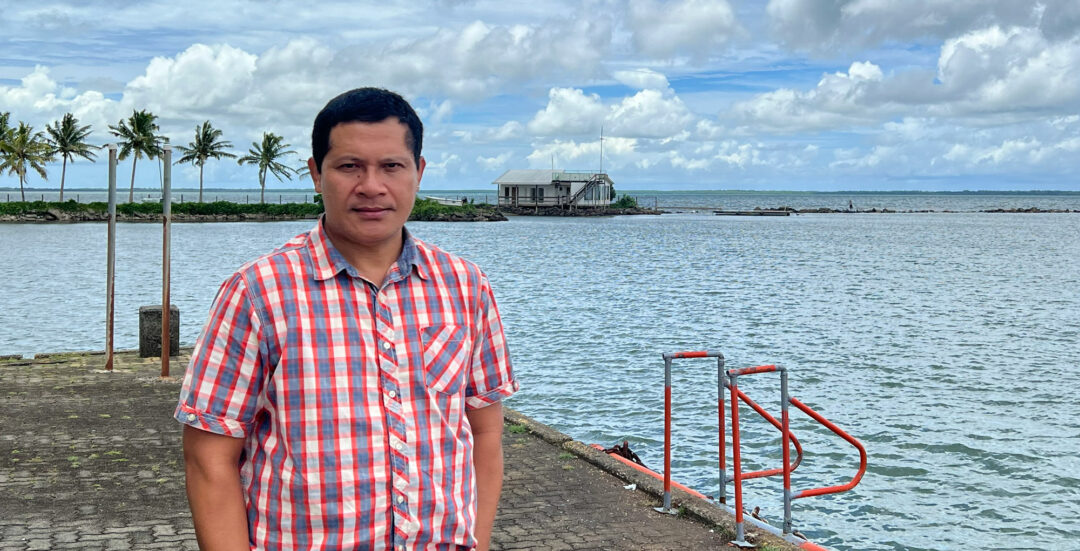
Vatuwaqa
“I don’t know how it happened, but it happened,” says Tolu Muliaina.
“Dr Tolu”, as he is often called, was born in Samoa but has lived for many years now in Suva. We sit in his cool office at USP in the city. He looks back on how he and his classmates in Vanuatu campaigned for the ICJ to tackle the climate issue.
He remembers the campaign with both joy and sorrow, he says. I ask why. He thinks a while and then answers that his whole perspective on life “rises from the soil of lived experiences”. His children, he emphasises, are an inseparable part of this.
Tolu’s voice trembles slightly as he gets deeper into his story.
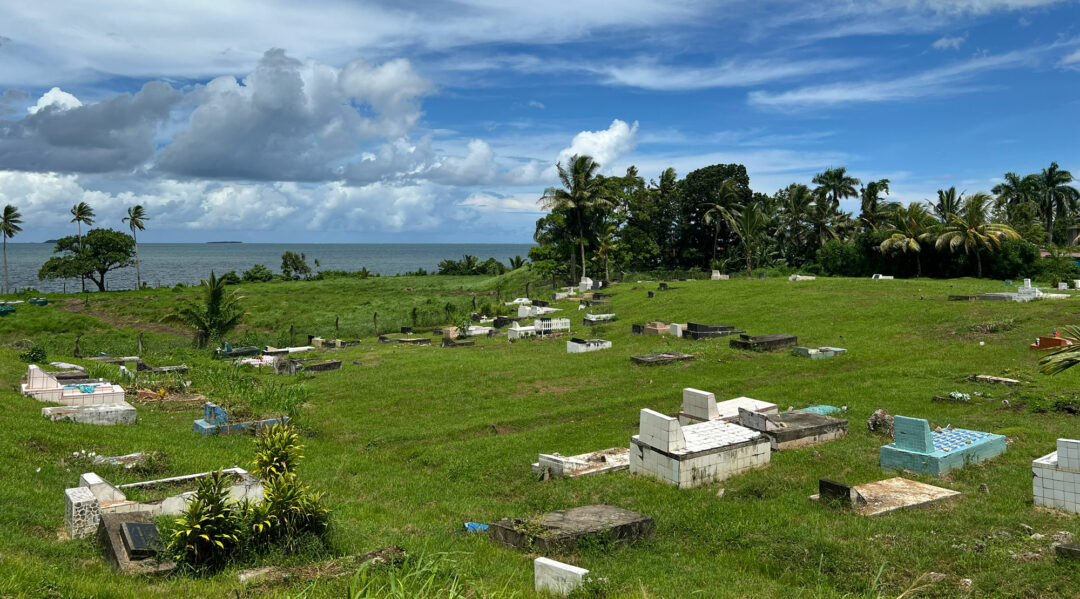
He tells me that his six-year-old son has been buried for many years in Vatuwaqa, the graveyard located on the green eastern coastal strip of Suva. His family back in Samoa wanted the boy’s body to be brought home, but it didn’t work out that way. Now the rising sea, the storms and heavy rains are whittling away the graveyard bit by bit.
The air conditioning in the room hums rhythmically; the wind outside the window makes the leaves of the palm trees wave. Tolu says, “This is my story. And not just mine, it is the story of many. I see and feel the fear every time a cyclone passes. Perhaps others worry about what will happen to their house. My family is afraid of losing a stretch of coast that holds something very dear to us.”
Photograph: Victor Galaz
Tolu’s story is indeed the story of many people. On the island nation of Tuvalu, huge cyclones are destroying graveyards located along the gradually disappearing shorelines. They say that people are sometimes forced out into the water in a desperate search for the remains of their loved ones after a storm, before the ocean carries them away. The same tragedy plays out on the Marshall Islands as the rising sea encroaches on coastal burial places.
After our conversation, I visited the graveyard, just a short taxi ride from the campus.
“Not even in death can we escape the climate crisis.” I don’t remember exactly who wrote that, but the words come back to me that day. I didn’t fully understand what it meant until that very moment.
Kava
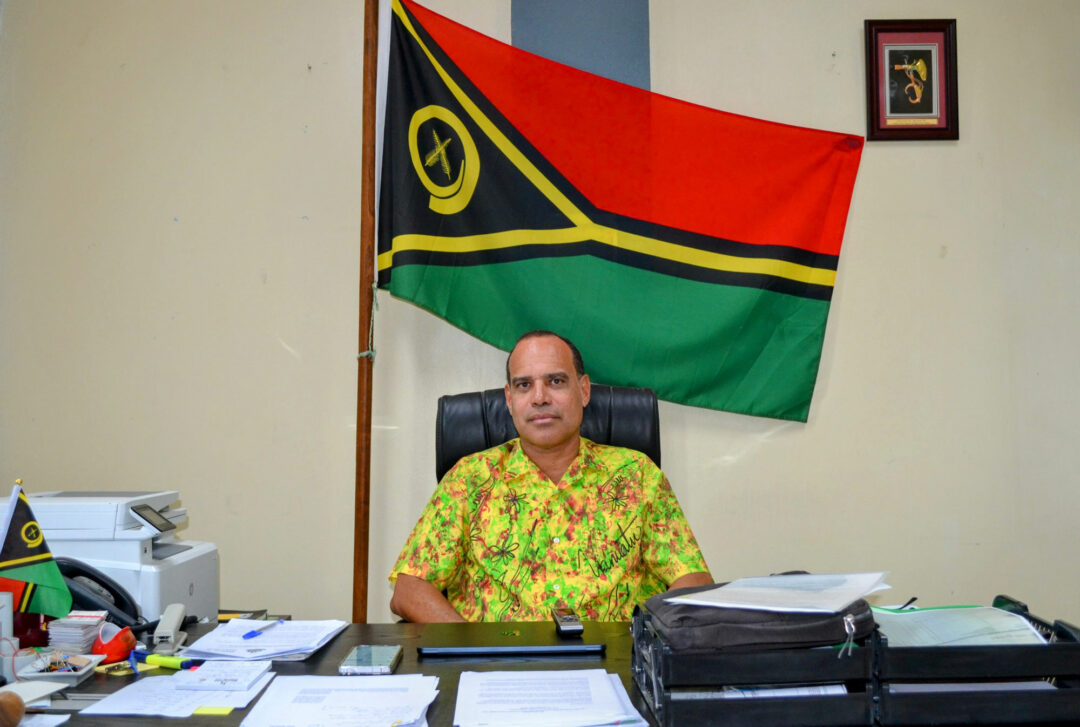
“Minister Ralph” wears a colourful Jackson Pollock-patterned shirt when we meet. The Vanuatu flag is nailed up on the wall behind his desk, the embodiment of his commitment as minister. If the ICJ statement is to have any effect in the real world, it needs support from governments around the world.
That’s why Vanuatu’s minister for climate change, Ralph Regenvanu, is seeking the support of other countries for a UN resolution to be voted on in the General Assembly. The problem is that the first draft of the resolution made the Trump administration hit the ceiling. Vanuatu had better withdraw its proposal, they heard from official channels, because it “could pose a major threat to US industry“.
I asked the minister what Vanuatu is going to do now. The staffer glances up briefly and makes a note in his mobile phone. The minister tells me that the draft has been rewritten. One of the most important parts of the document had to be eliminated – the one about creating an official registry of climate-related damage around the world.
“That was a difficult decision for us,” Regenvanu says. “That was the thing we really wanted.”
Photograph: Victor Galaz
In addition, the European Union, which has long been a reliable ally of vulnerable island nations, has taken a step back in this case. It is clear, the minister says, that the EU is prioritising security issues in the light of the war in Ukraine and the US retreat from the international order. But no, Vanuatu will not withdraw its draft resolution.
“The climate issue is our national security issue. It is a matter of survival for us. Our voice is the only thing we have, and we are getting tired of having to say the same thing over and over again. But we have no other choice.”
Getting back to my initial question: With the pressure from the Trump administration and a volcanic eruption on one of the northern islands in Vanuatu, which may require speedy evacuation (which the minister will be responsible for organising) – how do you sleep at night? I ask.
The minister smiles, and laughs for the first time during our conversation.
“Thanks, I slept well last night. And if not, there’s always kava, that helps.”

Afterword
In the first weeks in April, Typhoon Sinlaku grew from category one to category five in just 30 hours over the Pacific Ocean before sweeping over the Northern Marianas and Guam. Sinlaku was a part of the super typhoon, along with the cyclones Maila and Vaianu, which ripped across Fiji, the Solomon Islands and Papua New Guinea at the same time.
Back home again, I read about new memorials and poets grieving that the world is losing thousand-year-old ice giants like the Ok Glacier on Iceland.
At the same time, I realise, people thousands of miles away are mourning the loss of their memories, languages and cultures that are gradually disappearing in the depths of the Pacific Ocean. Kathy Jetn̄il-Kijiner, one of the great poets of the Pacific Rim, writes about this, and also about young parents she knows who are naming their children after disappearing islets and islands that have been passed down for generations. Peinam, Mejrirok, Mejatto, Bokaitoktok, Patto.
“Children with thick legs and full tummies, ambling around bearing the history and name of these ancient islands we call home.”
The vote on Vanuatu’s resolution in the UN General Assembly has been postponed twice in March and April. Now it looks like it might happen on 20 May.
This article is a reworked excerpt from Victor Galaz’s coming book Hav av öar – En berättelse om Oceanien och de krafter som formar vår värld (Sea of islands – a story about Oceania and the forces that shape our world, Fri Tanke, 2026). This article was first published in Swedish here. English translation by Jennifer Evans.
Victor Galaz
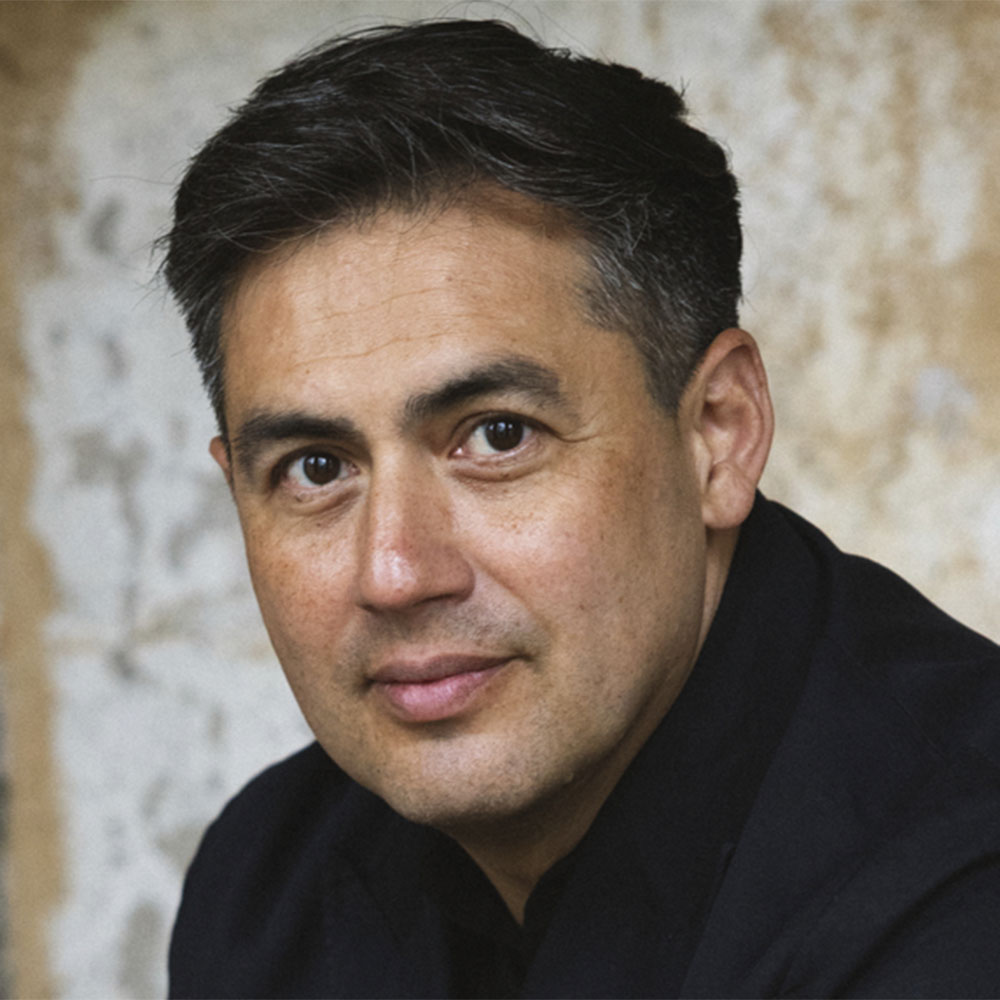
- Associate professor in political science at the Stockholm Resilience Centre at Stockholm University, and programme director at the Beijer Institute of Ecological Economics at the Royal Swedish Academy of Sciences.
- Conducts research on global environmental change, policy and technological change, and is a writer for the daily newspaper Svenska Dagbladet’s culture page.
- Author of books including Dark Machines – How Artificial Intelligence, Digitalization and Automation is Changing our Living Planet (Routledge, 2024).
Läs mer
Var klimatet lika varmt förr?
En 1 500 år gammal renfälla har hittats vid avsmältningen av en glaciär i Norge. Innebär det att det var lika varmt då som det är nu?
Rekordvarma sommaren får Alperna att rasa
Möt geologen som mäter Mont Blanc-massivet efter Västeuropas hetaste sommar hittills.
”Ekonomiska orättvisor ökar motståndet mot klimatomställning”
För att öka stödet för klimatpolitiken krävs minskade ekonomiska klyftor, argumenterar forskare i nätverket Earth4All.
Så bidrog klimatförändringar till bronsålderns kollaps
Flera högkulturers fall blev början till slutet för bronsåldern kring östra Medelhavet.
Möt människorna som berörs
Nobelpristagaren Le Clézio ger perspektiv på Vanuatus klimatkamp.